Flying After Surgery: How Long Should International Patients Stay in Thailand?
Flying After Surgery: How Long Should International Patients Stay in Thailand?
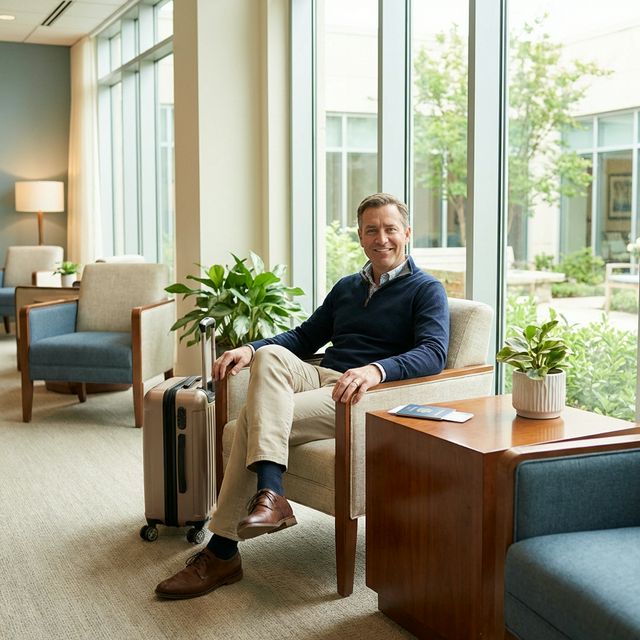
Making the decision to travel abroad for spine surgery requires significant trust and careful planning. For our international patients traveling to Thailand for Endoscopic Spine Surgery, managing travel timelines and ensuring flight safety are top priorities.
As a surgeon, your safe journey home is just as important to me as the surgery itself. Although the endoscopic incision is remarkably small, air travel involves cabin pressure changes and prolonged sitting. To ensure maximum safety, we follow a strict clinical pathway for our international guests:
1. Recommended Stay in Thailand (Approximately 7 to 9 Days)
- Hospital Stay (1-2 Nights): Immediately following the procedure, you will stay in the hospital for close monitoring, neurological assessment, and early mobilization.
- Recovery in Thailand (5-7 Days): After hospital discharge, we require patients to stay in a local hotel or accommodation in Thailand for an additional 5 to 7 days. This crucial window allows your body to stabilize. At the end of this period, you will have a follow-up appointment for a final wound inspection. If the incision is healing perfectly and you are mobilized well, you will be cleared to fly and provided with a formal "Fit to Fly" medical certificate.
2. Long-Term Follow-Up Care
Our commitment to your health does not end when you board your flight home. Standard follow-ups are scheduled every 3 to 6 months, designed with your convenience in mind:
- Telemedicine: If your recovery is progressing smoothly without any red-flag symptoms, routine check-ups can be comfortably conducted via video consultation.
- Local In-Person Consultations: For the convenience of our patients based in Myanmar, in-person follow-ups can often be seamlessly coordinated during my regular scheduled clinical visits to Ar Yu International Hospital in Yangon. This provides direct access to your surgeon without the need for additional international travel.
However, as all patients' conditions are varied and the decision-making process should be individualized, the feasibility of doing spinal endoscopy might not be the same for each patient. Consultation with a spine specialist is strongly recommended.
References
Questions about your symptoms?
Chat with us on LINE for more information
@bright.endospine
Chat on LINE