Neck Pain Decoded: Is it Office Syndrome or a Cervical Disc Herniation?
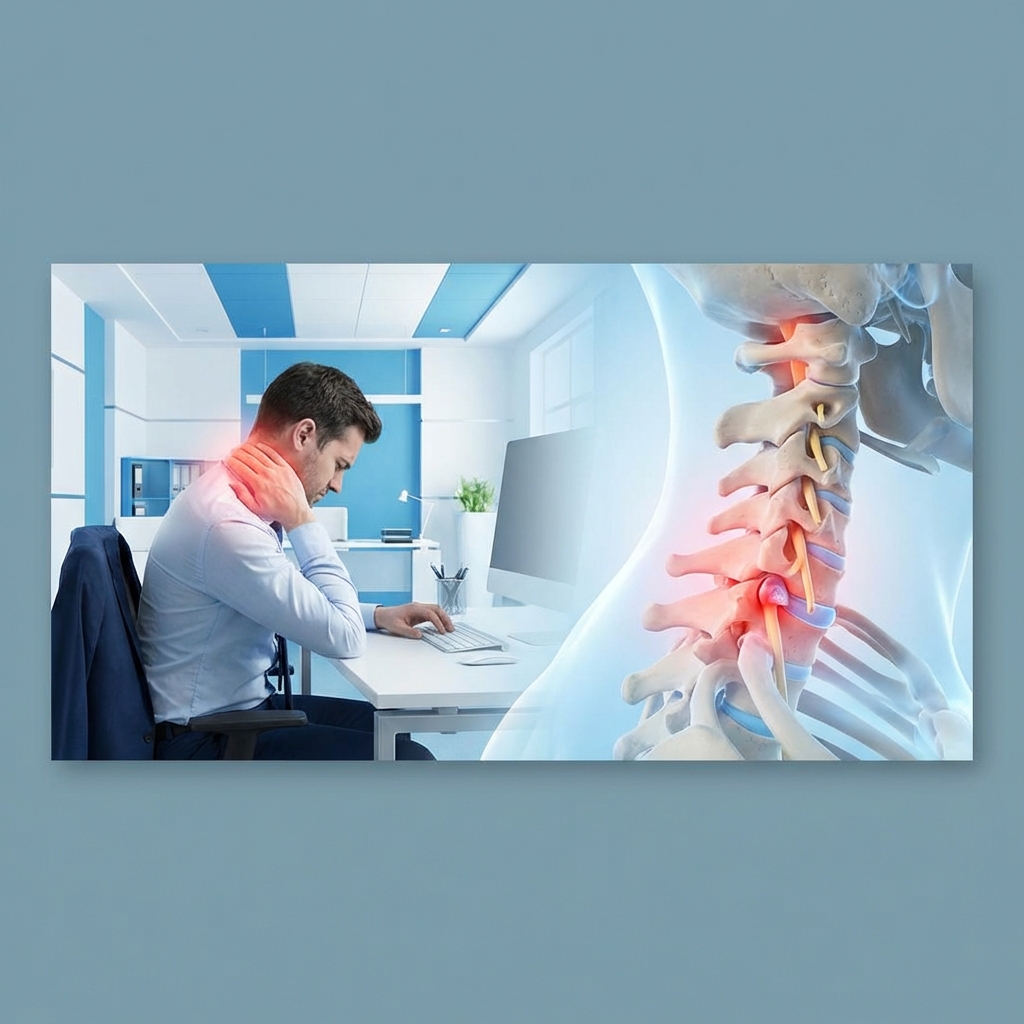
For modern professionals spending hours in front of screens, neck pain is an almost universal experience. However, it is crucial to distinguish between simple muscle fatigue and a structural issue with your spine.
1. Office Syndrome (Myofascial Pain Syndrome)
This is primarily a muscular issue caused by prolonged static posture.
- Pain Quality: A dull, aching, or "heavy" sensation in the neck, upper back, and shoulders.
- Trigger Points: You can often feel "knots" in the muscle that are intensely tender when pressed.
- Associated Symptoms: May cause tension headaches but never causes true muscle weakness or radiating numbness into the fingertips.
2. Cervical Disc Herniation (CDH)
This occurs when the disc material bulges or ruptures, irritating the nerve roots that travel to your arms.
- Pain Quality: Sharp, electric, or "shooting" pain that radiates from the neck down to the arm, forearm, or specific fingers (Radiculopathy).
- Neurological Signs: Numbness, "pins and needles," or a tingling sensation in the hands.
- Weakness: Difficulty with fine motor skills, such as buttoning a shirt, or a noticeable loss of grip strength.
How to Tell the Difference
A key differentiator is the Direction of Pain. Office syndrome stays localized to the muscles of the neck and shoulders. Cervical Disc Herniation "travels" beyond the shoulder joint. If tilting your head backward and toward the painful side triggers an electric shock down your arm, it is highly likely a nerve-related issue.
Modern Management
While Office Syndrome responds well to ergonomic adjustments and physical therapy, a herniated disc may require specialized intervention if conservative care fails.
At Bright.Endospine, we emphasize Minimally Invasive Surgery. With Cervical Endoscopic Procedures, we can decompress the nerve through a tiny portal, preserving the natural movement of your neck without the need for traditional fusion or large incisions. However, surgical techniques of choice should still be individualized for each patient. Spine Specialist consultation for a full physical examination is still strongly recommended.
Related procedure
Endoscopic Surgery for a Cervical Disc Herniation & Foraminal Stenosis (Posterior Cervical Foraminotomy/Discectomy) — a Motion-Preserving ApproachReferences

Questions about your symptoms?
Chat with us on LINE for more information
@bright.endospine
Chat on LINE