Leg pain or numbness when you walk, eased by sitting or leaning forward: causes, initial care, and when to see a doctor
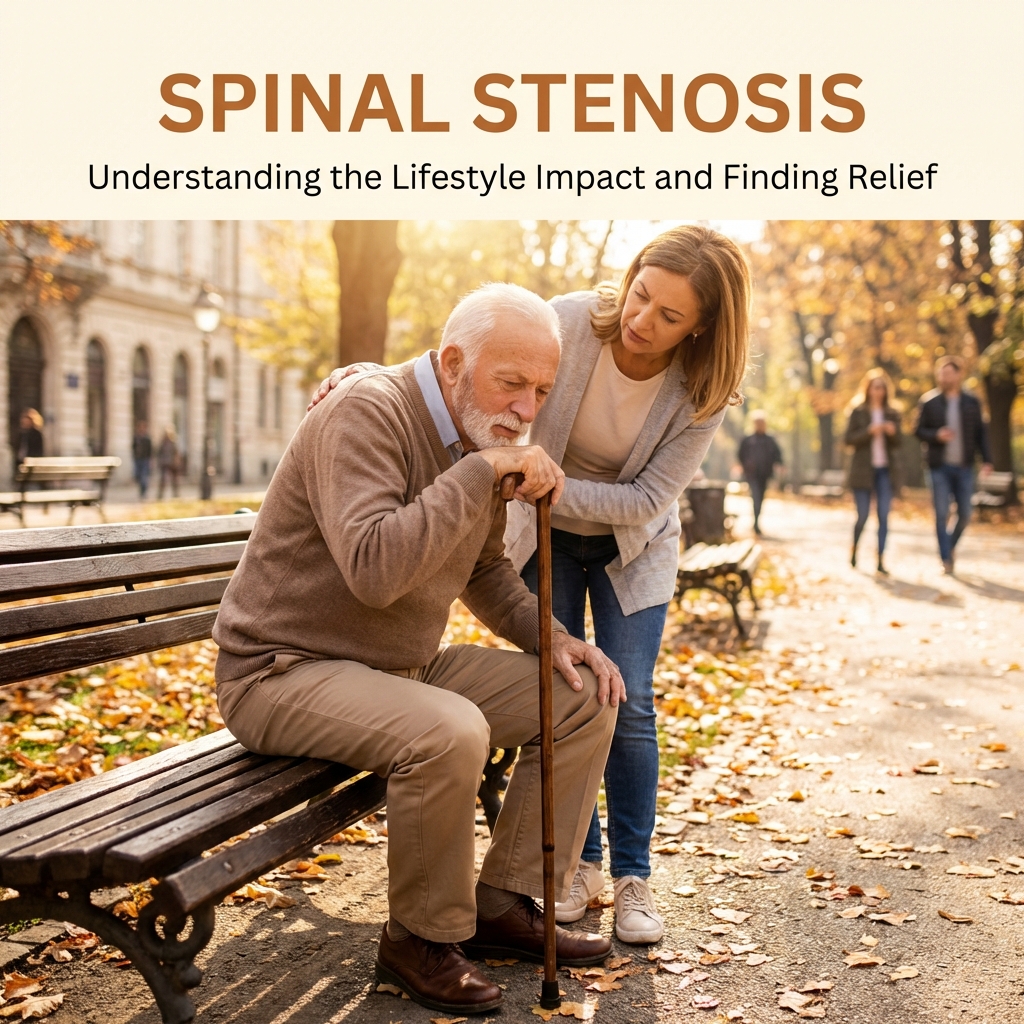
People with lumbar spinal stenosis often describe it in similar terms: after walking or standing for a while, they begin to feel pain, heaviness, fatigue, or numbness radiating into the buttock, thigh, or calf — until they have to stop and rest. And a common, characteristic observation is that the symptoms ease when they sit down or lean forward. Many notice they can walk farther in a shopping mall when leaning on a cart, or feel more comfortable cycling than walking.
These symptoms can be a source of worry, especially as the walking distance gradually shortens and starts to interfere with daily life. The questions patients most often ask are: what is this, is surgery necessary, and how can I care for myself at first? Dr. Siravich (Bright) has prepared this article to explain, plainly and on the basis of current medical evidence, how to understand the symptom and how to approach initial care.
Note: this article focuses on how to respond to the symptom. To understand the underlying condition — what lumbar spinal stenosis is and how it develops — please read the in-depth explainer → Lumbar Spinal Stenosis: What It Is
Why do the symptoms ease when you sit or lean forward?
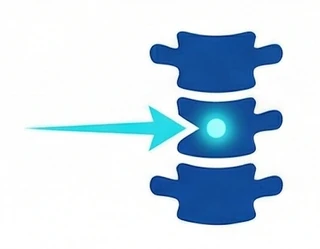
In spinal stenosis, the channels the lower-back nerves travel through narrow because of several age-related changes that usually occur together: disc degeneration or bulging, thickening of a ligament inside the canal, and bone overgrowth. As the space narrows, the nerves are compressed — especially when you stand upright or walk, postures that narrow the canal a little further. That is why pain or numbness radiating down the leg becomes more pronounced with prolonged walking or standing.
Conversely, when you sit or lean forward, the canal opens slightly, easing the pressure on the nerve, so the symptoms settle. This mechanism explains why so many patients can walk farther while leaning on a cart, and feel more comfortable cycling (a forward-leaning posture) than walking upright. This pattern of "limited walking distance, having to stop and rest" is known in medical terms as neurogenic claudication.
Stenosis itself is not an "acute" disease; it is a slowly progressive, age-related degenerative process. A definite diagnosis therefore requires a physical examination and, in many cases, imaging such as MRI, to confirm that the narrowing seen on the scan matches the actual symptoms.
A fact worth knowing: not everyone needs surgery
An important fact patients should understand from the outset is that many people with lumbar spinal stenosis can have their symptoms improved with non-surgical care, particularly while symptoms are not severe and there is no clear neurological deficit.
An international systematic review (Cochrane) that pooled the randomized trials comparing surgery with non-surgical treatment for this condition concluded that there is not enough clear evidence to say that surgery is better than non-surgical care for every patient. For that reason, beginning with non-surgical care in suitable patients — and making the decision about surgery individually, together with a doctor — is a reasonable approach, rather than rushing to operate in every case.
What does non-surgical care involve?
Non-surgical care (conservative treatment) usually combines several approaches, such as:
- Adjusting daily activity — breaking walking into shorter intervals with rest breaks, and choosing activities in a slightly forward-leaning posture that are often more comfortable, such as a stationary bicycle.
- Physical therapy and appropriate exercise — to strengthen the core trunk muscles and maintain flexibility, under the guidance of a doctor or physiotherapist.
- Medication to relieve pain and inflammation as advised by your doctor or pharmacist (taking anti-inflammatories on your own continuously for long periods without medical advice is not recommended).
- Targeted injections — such as an epidural steroid injection, in selected cases your doctor judges appropriate, to help relieve symptoms for a period.
The key to non-surgical care is consistency and follow-up, together with noting whether symptoms are improving, staying stable, or gradually worsening — which helps guide the next decision with your doctor.
When should you not wait to see a doctor?
Although most stenosis is slowly progressive, a few warning signs indicate you should see a doctor promptly, without waiting it out, because they may signal severe nerve compression. These include:
- Progressively worsening leg weakness — for example, inability to lift the front of the foot, tripping, or the leg giving way.
- Numbness around the buttock and genital area (saddle anesthesia).
- Loss of bladder or bowel control — incontinence, or unusual difficulty passing urine.
- Pain so severe that ordinary painkillers cannot relieve it, or a walking distance that shortens unusually quickly.
- Fever together with back pain, or a history of cancer.
These belong to a group covered in a separate article, with the reasons some of them should not wait → 5 Spine Red Flags You Should Never Ignore
If you have symptoms in this group, seeing a doctor quickly is not overreacting — it is protecting the nerve from lasting damage.
If full non-surgical care has not helped: surgical options
If a patient has had appropriate non-surgical care for a period of time (the duration depends on the individual's symptoms and the doctor's judgement) but the limited walking distance or radiating leg pain still seriously disrupts daily life, or there is clear weakness consistent with the MRI findings, the doctor may begin to discuss surgical options to "relieve the compression" with the patient.
One minimally invasive option available today is full-endoscopic decompression — using a high-definition endoscope through a small incision to reopen space for the nerve, removing only the structures that press on it (such as the thickened ligament or a portion of bone) while disturbing the surrounding muscle as little as possible. A systematic review published in The Spine Journal concluded that endoscopic and microscopic decompression are both safe and effective techniques for treating this condition. For the details of who is and is not a suitable candidate, how the procedure is performed, the recovery time, and the honest risks, please see this page:
The key point to understand: "operable" does not mean "must operate"
This is a common misunderstanding, so it is worth stating clearly: the fact that technology allows surgery through a smaller incision does not mean that everyone with stenosis should have surgery. Choosing the right patient for the right treatment (patient selection) matters just as much as the surgical technique itself.
In stenosis, the key questions are whether compression is genuinely the dominant problem, and whether there is any accompanying slippage or instability. Patients with significant slippage/instability, or with significant spinal deformity, may need a different operation — such as a spinal fusion — which in those cases may be more appropriate and safer. Endoscopic decompression is therefore not the answer for every pathology.
An appropriate decision therefore comes from a consultation with a spine specialist who has examined the patient, performed a physical examination, and reviewed the patient's MRI together — not from reading a single article (this one included). This article is only a starting point to help patients understand their condition and ask their doctor better questions.
FAQ
Q: I can't walk far and have to keep stopping to rest — do I need surgery right away?
A: Usually not right away. Many patients improve with non-surgical care. Doctors generally consider surgery when full non-surgical care has not helped and symptoms still seriously disrupt daily life, or when there is weakness or a warning sign.
Q: Why do I feel better leaning forward or sitting, but worse standing or walking for long?
A: Leaning forward opens the nerve canal slightly, easing the pressure on the nerve; standing upright or walking narrows it further, so symptoms become more pronounced. This is a characteristic feature of lumbar spinal stenosis.
Q: Is it dangerous to leave it rather than operate soon?
A: Most stenosis is slowly progressive, and starting with non-surgical care in suitable patients is reasonable. However, if you develop worsening leg weakness, numbness around the buttock and genital area, or loss of bladder or bowel control, see a doctor promptly — do not wait it out (see the "red flags" article).
Q: After endoscopic decompression, is it cured for good and won't come back?
A: Surgery relieves the compression, so symptoms usually improve — but it does not stop the natural degeneration of the spine, so symptoms can return over the long term. It is not a "permanent cure," which is why ongoing self-care and follow-up matter (details on the procedure page).
Q: Can multi-level stenosis be treated endoscopically?
A: It depends on whether the narrowing is genuinely the dominant problem, whether there is accompanying slippage/instability, and how severe any deformity is. Some cases suit decompression; others need a different approach. Individualized assessment from the MRI is essential (more on the procedure page).
Every patient's situation differs in its details. This information helps with the overall picture, but decisions should be individualized together with a spine specialist.
References
- Jitpakdee, K., Liu, Y., Heo, D. H., Kotheeranurak, V., Suvithayasiri, S., & Kim, J. S. (2023). "Minimally invasive endoscopy in spine surgery: where are we now?" European Spine Journal. [Link]
- Chin, B. Z., Yong, J. H., Wang, E., et al. (2024). "Full-endoscopic versus microscopic spinal decompression for lumbar spinal stenosis: a systematic review & meta-analysis." The Spine Journal, 24(6):1022–1033. [Link]
- Zaina, F., Tomkins-Lane, C., Carragee, E., & Negrini, S. (2016). "Surgical versus non-surgical treatment for lumbar spinal stenosis." Cochrane Database of Systematic Reviews. [Link]

Questions about your symptoms?
Chat with us on LINE for more information
@bright.endospine
Chat on LINE