Endoscopic Decompression for Spinal Metastatic Tumor: An Investigational, Palliative Role
Please read first, with care: Endoscopic decompression for a spinal metastatic tumor is an approach that is still investigational and used only in selected cases (investigational / selective), and it is palliative — aimed at relieving compression to help preserve function and quality of life. It is not a cure for cancer. Treatment planning must be a shared decision by a multidisciplinary team, and the standard primary options — radiotherapy, standard surgery, and systemic therapy (chemotherapy / targeted therapy / immunotherapy) — remain the core of care. This article is here for understanding only.
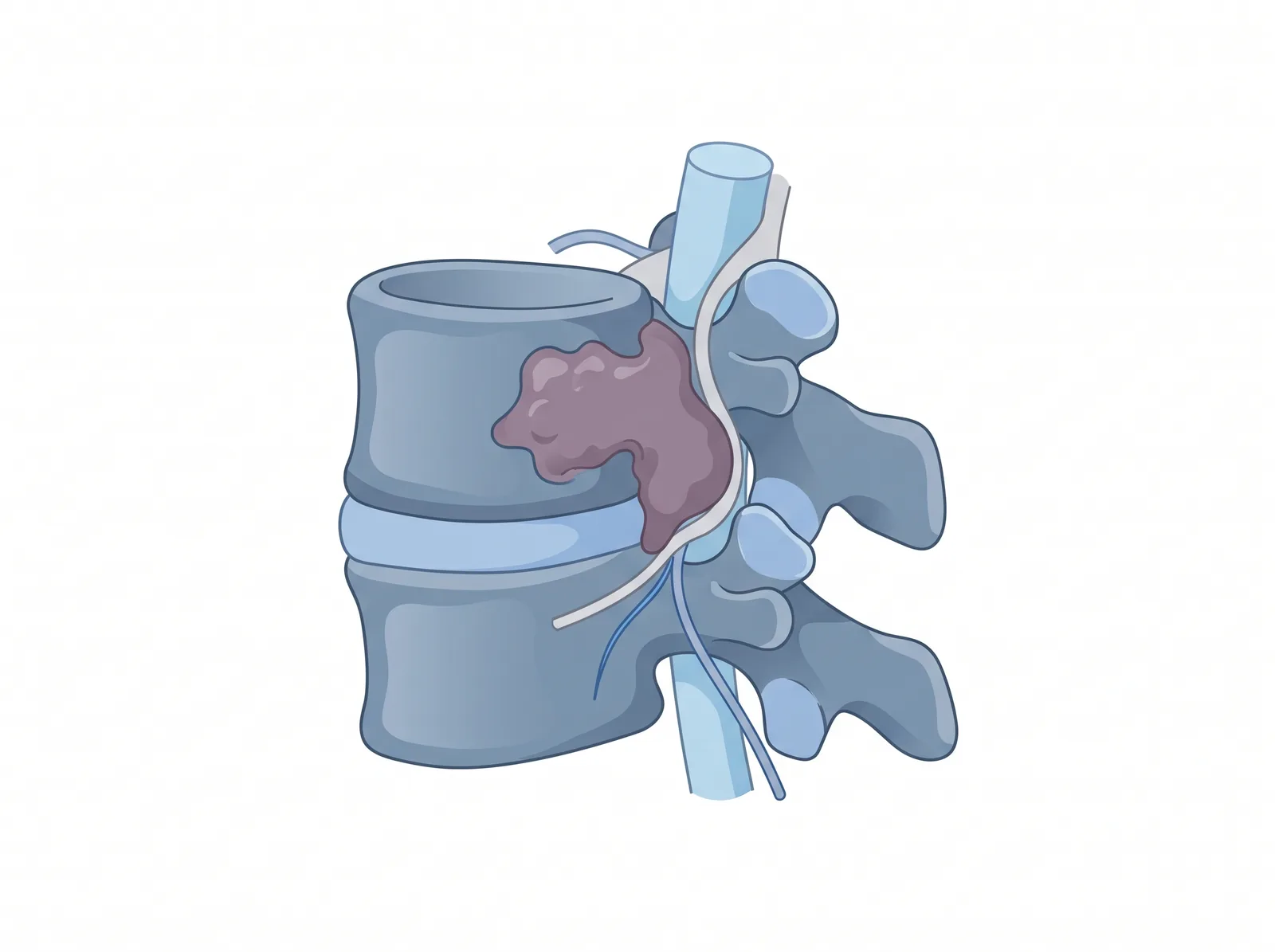
When cancer from another organ spreads to the spine (spinal metastasis), a tumor or a collapsing bone can sometimes press on the spinal cord or nerves, causing pain, weakness, numbness, or problems with bladder and bowel control. In this situation, the goal of care is to help the patient be more comfortable and to preserve function and quality of life, alongside the overall treatment of the cancer. I want to say this honestly and with care: caring for cancer in the spine is the work of a multidisciplinary team — oncologists, radiation oncologists, surgeons, and the palliative-care team together. The standard options — radiotherapy, standard surgery, and systemic therapy — remain the core. Endoscopic decompression is an emerging, palliative approach under study for certain, carefully selected patients. In this article I want to explain what this approach is, and where it might fit within a team's plan — it is not a cure, and it is not an invitation to choose this option.
What is endoscopic decompression for spinal metastasis?
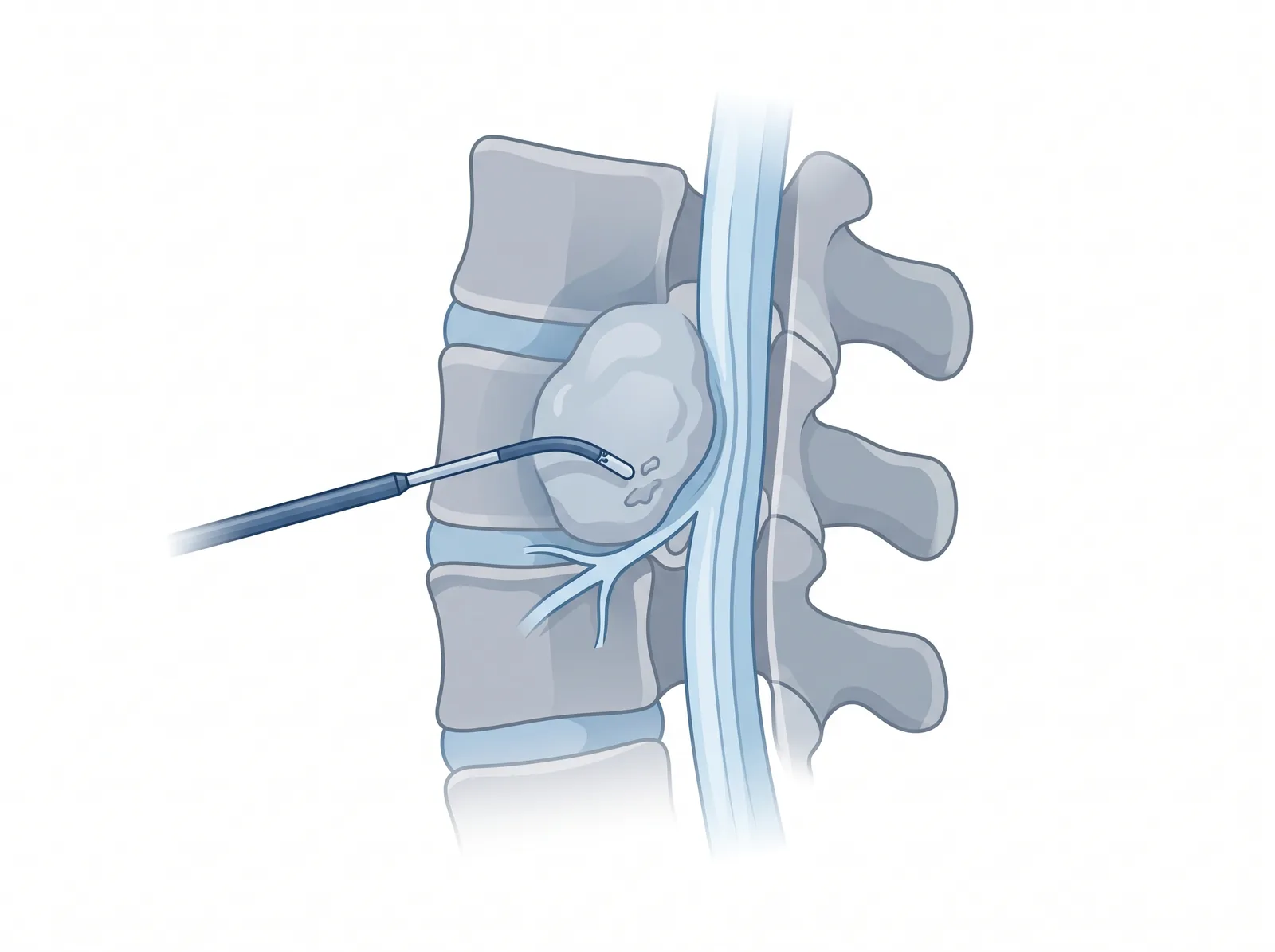
The principle is to pass a high-definition endoscope through a small incision to relieve the compression where a tumor or bone is pressing on the cord/nerves — removing only as much of the compressing tissue as needed to reopen space for the nerve and help ease symptoms.
The theoretical rationale for studying this approach is that it disturbs the body relatively little, which in some patients may allow faster recovery and a quicker return to cancer treatment (such as radiotherapy or medication) — because for a patient with metastatic cancer, time and strength are precious. That said, this is an approach under study and used only in selected cases — not a settled conclusion — and it does not replace radiotherapy, standard surgery, or systemic therapy.
One related concept is "separation surgery" — decompressing to create a small margin between the tumor and the spinal cord so that precise radiotherapy can be delivered more safely. This reflects how surgery in this setting usually works together with radiotherapy, rather than replacing it.
For the big picture of what endoscopic spine surgery is, see
Who might be considered — and who is not (the honest version)
Again: all of these decisions belong to a multidisciplinary team together with the patient and family — and this is a very selective choice, because the endoscopic approach in this setting is still under study.
Some situations where it might be considered include:
- There is cord/nerve compression causing symptoms, and the team judges that decompression would help preserve function or relieve symptoms.
- There is a need to create a margin so radiotherapy can be delivered more safely (separation surgery).
- Certain patients for whom reducing surgical impact matters, to return to cancer treatment sooner.
Not a suitable choice in situations such as:
- A significantly unstable or collapsing spine, which usually requires standard surgery to stabilize the structure (sometimes with instrumentation).
- Multi-level or extensive compression needing thorough decompression.
- Cases where radiotherapy or systemic therapy alone is already the most appropriate and safest path — many patients do not need surgery.
On indications — and why patient selection matters — see
How it is generally done (when the team judges it appropriate)
The general flow (details are individualized and decided together by the team):
- Planning by the multidisciplinary team — MRI, the type and stage of cancer, the prognosis, and the patient's wishes.
- Anesthesia — selected for each patient with the anesthesiologist.
- Guiding the endoscope to the compressed area — using MRI planning and intra-operative X-ray for positioning.
- Relieving the compression — under high-definition magnification and continuous irrigation, removing only as much of the compressing tissue as needed to ease symptoms and help preserve neurological function.
- Coordinating continued treatment with the cancer team — such as radiotherapy or systemic therapy per the team's plan, because surgery is only one part of care, not the whole.
Endoscopic surgery relies on a precise MRI to plan the trajectory — see
Recovery and ongoing care — what to realistically understand
- The goal of care in this setting is to relieve symptoms and preserve quality of life, not to cure the cancer. Overall care continues with the cancer team.
- The theoretical advantage of a small incision is that it may allow faster recovery and a quicker return to cancer treatment in some patients — but recovery depends on the type and stage of cancer, overall health, and the other treatments involved, so it varies widely between individuals.
- Hospital stay and recovery cannot honestly be given as a fixed number, because they depend on each patient's condition.
For general post-operative care, see the post-op article, and for the warning signs that need prompt evaluation, see
Risks, limits, and the "under study" status (educational, with care)
Every operation carries risk, especially in cancer patients whose bodies may be frail. Risks and limits to understand include:
Please read first, with care: Endoscopic decompression for a spinal metastatic tumor is an approach that is still investigational and used only in selected cases (investigational / selective), and it is palliative — aimed at relieving compression to help preserve function and quality of life. It is not a cure for cancer. Treatment planning must be a shared decision by a multidisciplinary team, and the standard primary options — radiotherapy, standard surgery, and systemic therapy (chemotherapy / targeted therapy / immunotherapy) — remain the core of care. This article is here for understanding only.
- It is not a cure — it relieves symptoms / preserves function; the cancer still needs ongoing care from the team, and symptoms may return if the disease progresses.
- Bleeding / infection / injury to nerves or the dura — the general risks of spine surgery.
- Spinal instability — in patients with extensive bone destruction, decompression alone may be insufficient and standard stabilizing surgery may be needed.
- Recurrent or progressing compression — because this is cancer, the disease may progress.
- Limited evidence — because this is an approach under study, long-term results and the ideal patient group still need further research.
On the chance of recurring problems after spine surgery in general, see
FAQ
Does this endoscopic surgery cure spinal metastatic cancer?
No. Its purpose is to relieve symptoms and preserve function / quality of life in selected patients — not to cure the cancer. Overall cancer care continues with the medical team.
Why is surgery sometimes combined with radiotherapy?
In some patients, decompression creates a small margin between the tumor and the spinal cord, so that precise radiotherapy can be delivered more safely (the "separation surgery" concept). This reflects how surgery usually works together with other treatments.
Who decides whether surgery is appropriate?
It is a shared decision by a multidisciplinary team (oncologists, radiation oncologists, surgeons, palliative-care team) together with the patient and family — weighing the type/stage of cancer, the prognosis, and the patient's goals.
Is this endoscopic approach already standard treatment?
No. It is an emerging, selective, palliative approach under study. The standard primary options remain radiotherapy, standard surgery, and systemic therapy.
(Every case is different and decisions should be individualized with your medical team. Consulting your doctors to assess your actual situation is strongly recommended.)
References
- Note: on the first study below, Dr. Siravich is the first author of the international patient series — presented here as general academic literature, not as personal treatment results, and not as a guarantee of outcome. · Suvithayasiri, S., Kim, Y. J., Liu, Y., et al. (2023). "The Role and Clinical Outcomes of Endoscopic Spine Surgery of Treating Spinal Metastases; Outcomes of 29 Cases From 8 Countries." Neurospine, 20(2), 608–619. [Link]
- Laufer, I., et al. (2013). "The NOMS framework: approach to the treatment of spinal metastatic tumors." The Oncologist, 18(6), 744–751. [Link]
- Patchell, R. A., et al. (2005). "Direct decompressive surgical resection in the treatment of spinal cord compression caused by metastatic cancer: a randomised trial." The Lancet, 366(9486), 643–648. [Link]
- Jitpakdee, K., Liu, Y., Heo, D. H., Kotheeranurak, V., Suvithayasiri, S., & Kim, J. S. (2023). "Minimally invasive endoscopy in spine surgery: where are we now?" European Spine Journal, 32, 2755–2768. [Link]

Questions about your symptoms?
Chat with us on LINE for more information
@bright.endospine
Chat on LINE