Endoscopic Spine Surgery for Spinal Infection (Spondylodiscitis): An Emerging, Investigational Role
Please read first: Using endoscopic surgery for spinal infection is an approach that is still emerging and used only in selected cases (investigational / selective). It is not standard treatment and is not something that can be guaranteed. The mainstay of treatment for spinal infection today is targeted antibiotics, and in many cases standard (open) surgery. This article is here to explain what the endoscopic approach is and where it might fit — it is not a recommendation to choose it.
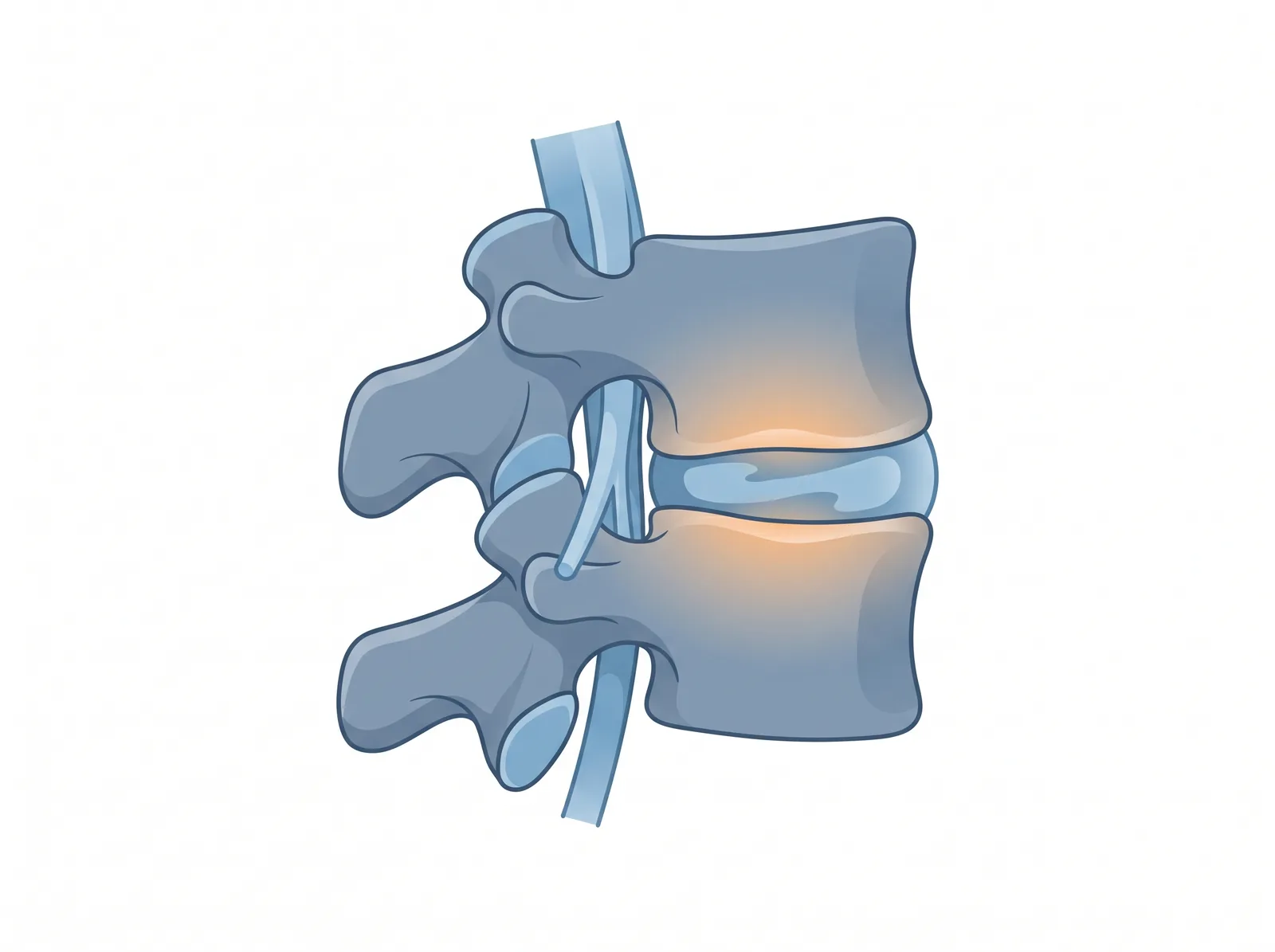
Infection of the spinal disc and the surrounding bone — together called spondylodiscitis — is uncommon but important. It often shows up as persistent back pain that does not improve, sometimes with fever, fatigue, or raised inflammatory markers in the blood. Diagnosis relies on MRI together with blood tests and, crucially, identifying the causative organism — because knowing which germ is causing the infection is the heart of choosing the right antibiotic. I want to be very clear up front: the mainstay of treatment for this condition is targeted antibiotics. Many patients get better with medication alone, without surgery. Surgery is considered only in certain situations — for example, an abscess pressing on the nerves or spinal cord, an unstable spine, an infection not responding to antibiotics, or a case where the organism still cannot be identified and a tissue sample is needed for culture. In this article I want to describe the role that is currently being studied for endoscopic surgery in some cases of this condition — as an option still under investigation, not as standard treatment.
What is endoscopic surgery for spinal infection?
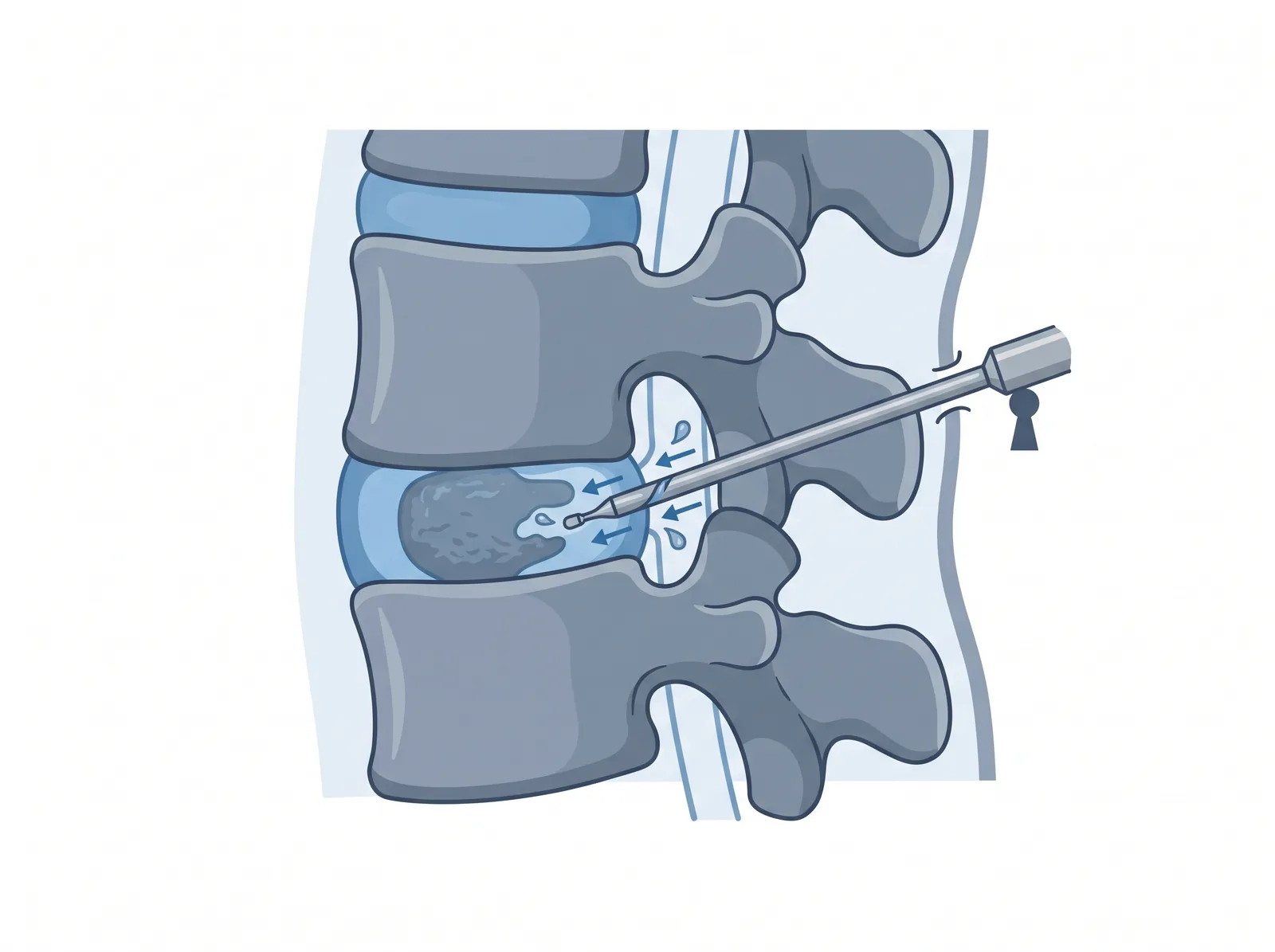
The principle is to pass a high-definition endoscope through a small incision to reach the infected area, in order to do one or more of the following in selected cases:
- Take a tissue sample for culture (biopsy) — to help identify the organism, which is essential for choosing the right antibiotic.
- Drain pus / clean the infected area (debridement / irrigation) — removing some of the infected tissue and pus, with saline washout.
The technical feature that explains why this approach is being studied is that it disturbs the surrounding tissue relatively little, which in theory may suit certain patients whose bodies are not well suited to major surgery. That said, this is an approach under study — not a settled conclusion — and it does not replace antibiotics or standard surgery. For the big picture of what endoscopic spine surgery is, see
Who might be considered — and who is not (the honest version)
Again: most patients are treated primarily with antibiotics. Surgery of any kind is a matter of careful patient selection, and considering the endoscopic approach is an even more selective decision because it is still being studied.
Some situations where surgery might be considered (as a shared team decision) include:
- The organism still cannot be identified, and a tissue sample is needed for an accurate culture.
- There is pus or inflammation beginning to press on a nerve, but still limited in extent, with the spine still stable.
- Certain patients with many medical conditions for whom major surgery carries high risk (the theoretical rationale behind studying a small-incision approach).
Not a suitable choice in situations such as:
- Significant spinal instability / collapse or deformity, or a large abscess — these usually require standard surgery (sometimes with instrumentation to stabilize the bone).
- Severe spinal-cord compression or neurological symptoms needing thorough decompression.
- Cases where antibiotics alone are already the most appropriate and safest path.
On indications — and why patient selection matters — see
How it is generally done (when judged appropriate)
The general flow (details are individualized and decided together by the medical team):
- Assessment and planning with the team — MRI, inflammatory markers, and overall health.
- Anesthesia — selected for each patient with the anesthesiologist (for frail patients, local anesthesia is sometimes chosen).
- Guiding the endoscope to the infected area — using MRI planning and intra-operative X-ray for positioning.
- Taking a biopsy and/or draining and cleaning — under high-definition magnification and continuous saline irrigation.
- Continuing antibiotics guided by the culture — because surgery does not replace medication; in selected cases it is an adjunct (helping to obtain a culture, or reduce the burden of pus/infection).
Endoscopic surgery relies on a precise MRI to plan the trajectory — see
Recovery and ongoing care — what to realistically understand
- Spinal infection is a condition that needs follow-up over a period of time. Antibiotic treatment often takes several weeks, with close monitoring of inflammatory markers and symptoms.
- Even though a small incision disturbs the body less, clearing the infection depends mainly on medication — and on managing any underlying risk factors (such as diabetes or a weakened immune system).
- Hospital stay and recovery vary widely between individuals, depending on the severity of infection, the organism, and overall health — so a single fixed number cannot honestly be given.
For general post-operative care, see the post-op article, and for the warning signs of back pain that need prompt evaluation, see
Risks, limits, and the "under study" status (educational, not alarmist)
Every operation carries risk, even with a small incision. Risks and limits to understand include:
Please read first: Using endoscopic surgery for spinal infection is an approach that is still emerging and used only in selected cases (investigational / selective). It is not standard treatment and is not something that can be guaranteed. The mainstay of treatment for spinal infection today is targeted antibiotics, and in many cases standard (open) surgery. This article is here to explain what the endoscopic approach is and where it might fit — it is not a recommendation to choose it.
- Persistent or recurrent infection — because clearing the infection depends mainly on medication; if a small operation is chosen inappropriately, it may not drain pus or control the infection adequately, and a repeat operation or conversion to standard surgery may be needed.
- Spinal instability / increasing deformity — in some patients with extensive bone destruction, instrumentation may be required.
- Dural tear or nerve injury — uncommon, but possible.
- Limited evidence — because this is an approach under study, the long-term results and the ideal patient group still need further research.
On the chance of recurring problems after spine surgery in general, see
FAQ
Does endoscopic surgery cure a spinal infection on its own?
No. Clearing the infection depends mainly on targeted antibiotics. Endoscopic surgery (in selected cases) is only an adjunct — for example, to obtain a tissue culture or drain some pus — and it is still an approach under study, not standard treatment.
Why take a tissue sample for culture?
Because knowing which organism is responsible lets doctors choose a more precise and effective antibiotic. In some patients where blood cultures or a percutaneous sample don't identify the organism, a direct tissue sample may improve the chance of identifying it.
If my doctor says no surgery yet, antibiotics only — is that wrong?
Not at all — quite the opposite. Many patients recover with antibiotics without surgery. Medication-first is the standard approach.
Is this endoscopic approach already a standard treatment?
No. Endoscopic surgery for spinal infection is still an emerging, selective approach and should be considered case by case by the medical team.
(Every case is different and decisions should be individualized. Consultation with a spine specialist is strongly recommended to assess your actual symptoms.)
References
- Note: on one of the review articles below, Dr. Siravich is one of the co-authors — presented here as general academic literature, not as personal treatment results. · Giordan, E., Liu, Y., Suvithayasiri, S., Russo, S., Lee, C., Hasan, G. A., & Kim, J. S. (2024). "Endoscopic Treatment of Thoracolumbar Spondylodiscitis: A Systematic Review and Meta-Analysis." World Neurosurgery, 189, 296–306. [Link]
- Abreu, P. G. P., et al. (2022). "Endoscopic treatment of spondylodiscitis: systematic review." European Spine Journal, 31(7), 1765–1774. [Link]
- Jitpakdee, K., Liu, Y., Heo, D. H., Kotheeranurak, V., Suvithayasiri, S., & Kim, J. S. (2023). "Minimally invasive endoscopy in spine surgery: where are we now?" European Spine Journal, 32, 2755–2768. [Link]

Questions about your symptoms?
Chat with us on LINE for more information
@bright.endospine
Chat on LINE