Uniportal Endoscopic-Assisted Lumbar Interbody Fusion — for Instability / Spondylolisthesis
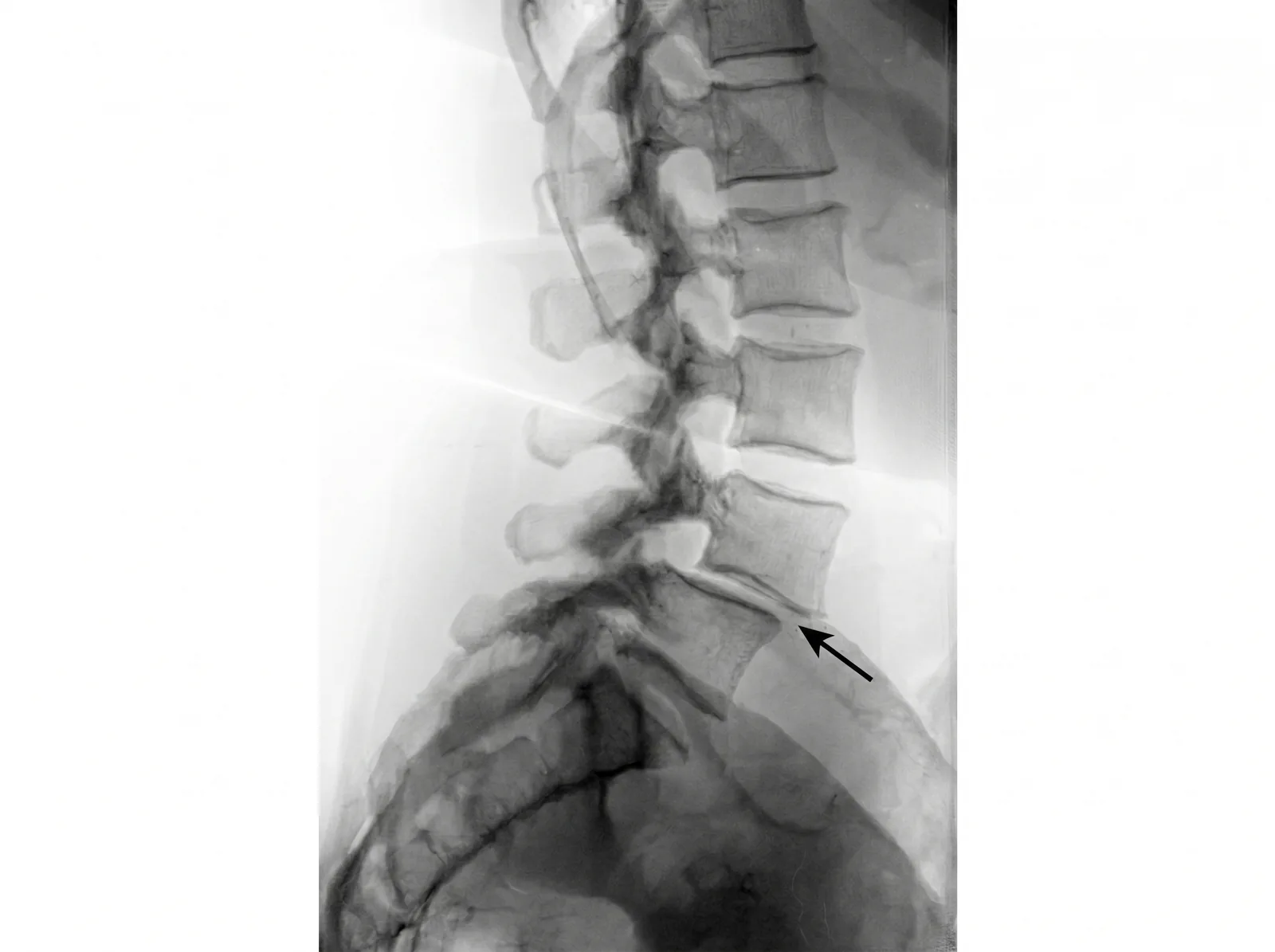
In some patients, back and leg pain is not caused by nerve compression alone — there is also spondylolisthesis (slippage) or instability, meaning the spinal segment moves abnormally. In these cases, relieving the compression alone may not be enough, and the surgeon may consider lumbar interbody fusion — joining the unstable segment so it becomes stable. There is growing interest in using endoscopic techniques to assist fusion. One of these is uniportal endoscopic-assisted lumbar interbody fusion. I want to be clear from the start: this is a technique that is still developing, used only in carefully selected patients, and open fusion or other minimally invasive (MIS) fusion techniques remain the correct, appropriate choice in many situations. In this article I want to explain, in plain language, what this operation is, who is and isn't a good candidate, how it is done, and what its limits are.
Why do some people need "fusion," not just "decompression"?
Spine surgery has two main, distinct goals:
- Decompression — removing what is pressing on the nerve. Suitable when compression is the main problem and the spine is still stable.
- Fusion — joining an abnormally moving segment so it becomes stable. Suitable when there is slippage / instability such that decompression alone is not enough.
If slippage/instability accompanies the compression, decompression alone may give a disappointing result or worsen the instability — which is where fusion has a role. On when "decompression alone is enough" versus when "fusion is also needed," see
What is uniportal endoscopic-assisted fusion?
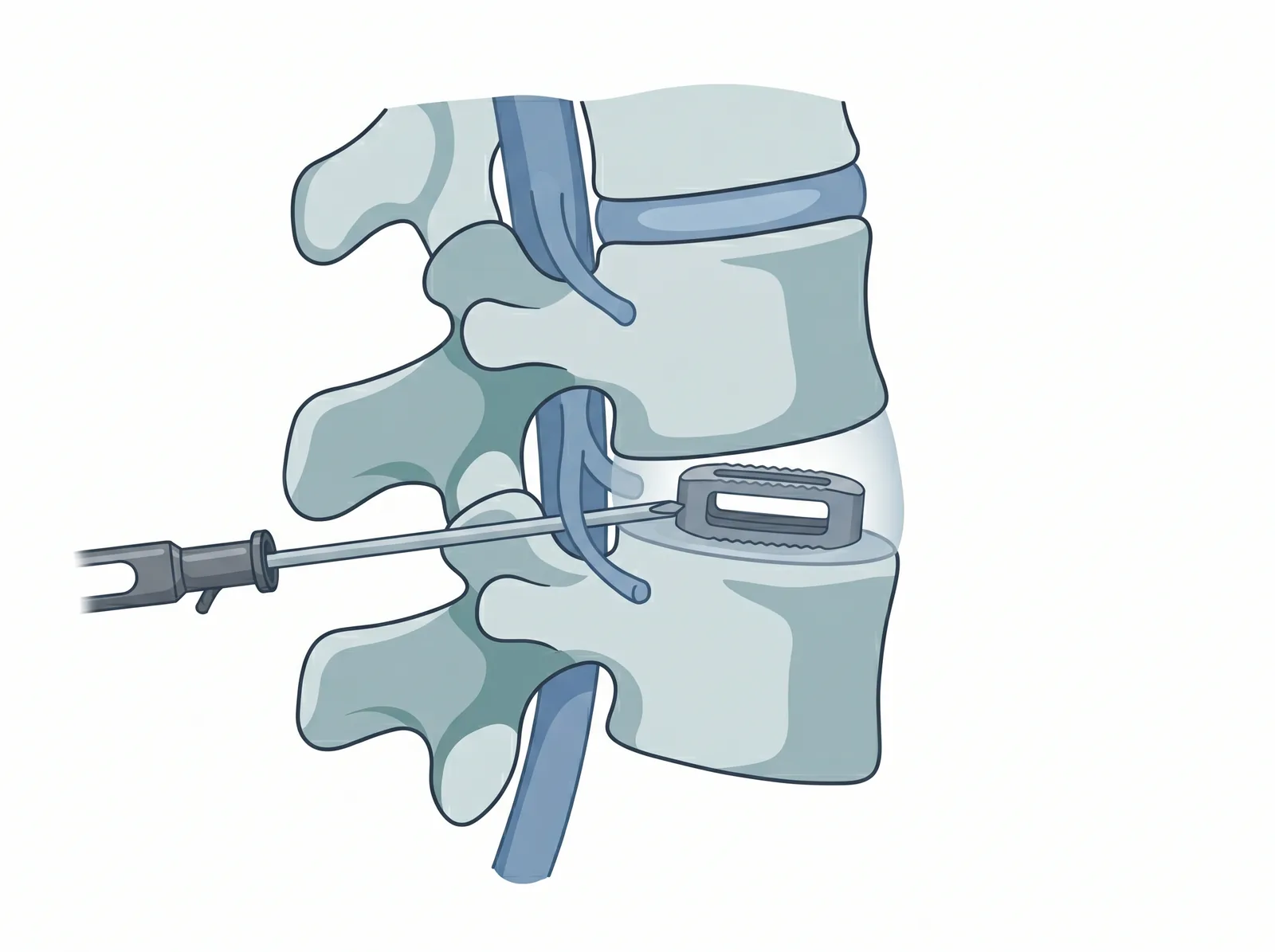
The principle is to use a uniportal (full-endoscopic) endoscope to help visualize and work through a small corridor in order to:
- Relieve nerve compression where needed.
- Prepare the joint surfaces between the vertebrae.
- Place an interbody cage together with a bone graft into the disc space.
- Usually add screws (often percutaneously) for stability.
An important thing to understand is that "endoscopic" fusion is exactly the point where the line between "full-endoscopic surgery" and "minimally invasive (MIS) surgery" begins to overlap — and the research evidence for this technique is still accumulating and maturing, compared with standard fusion approaches that have more long-term data. Scope note: this page covers only the uniportal endoscopic technique — it does not cover other MIS fusion techniques (such as MIS-TLIF or OLIF) or biportal (UBE) endoscopic techniques.
Who it is for — and who it is NOT for (the honest version)
This technique is not right for every patient or every pathology. Because it is a still-developing technique, careful patient selection matters especially.
May be an option when:
- There is low-to-moderate-grade spondylolisthesis (e.g. an early grade) together with nerve compression that has not improved with non-surgical care.
- The problem is at a single level and the anatomy suits this approach.
- The patient and surgical team have weighed the benefits and limits of a still-maturing technique together.
Not the right choice — and where open or other MIS fusion is usually considered — in situations such as:
- Severe slippage, marked instability, or multilevel deformity.
- A need to correct spinal alignment or to fuse multiple levels.
- Pathology or anatomy that makes a uniportal endoscopic approach high-risk or unsuitable.
- Cases where standard fusion approaches, backed by long-term data, are the safer and more appropriate option.
On indications — when endoscopy is not the right call, and why patient selection matters — see
How it is done (the approach)
Details are individualized, but the general flow is:
- Anesthesia — selected for each patient together with the anesthesiologist.
- A small incision — reaching the problem segment, using MRI planning and intra-operative X-ray for positioning.
- Decompression and joint-surface preparation — under high-definition endoscopic magnification and continuous irrigation.
- Placing the interbody cage with bone graft — into the disc space to support the segment and help the bone fuse.
- Adding screws for stability — often percutaneously — then closure.
Fusion — the bone actually growing together — is a process that takes many months after surgery; it does not happen immediately. The operation relies on a precise MRI to plan — see
Recovery — what to realistically expect
- Fusion surgery is generally a bigger operation than decompression alone, so recovery is usually longer and is individualized to overall health and the number of levels operated on.
- Solid bony fusion takes many months. During this time, follow post-operative guidance closely — especially avoiding bending, heavy lifting, and twisting early on, and increasing activity gradually.
- Ongoing follow-up matters, so the surgeon can assess how the bone is fusing.
Reported benefits of the endoscopic / minimally invasive approach versus open fusion
- Less blood loss during surgery, and less muscle and soft-tissue trauma (markers of muscle injury such as CK and CRP have been reported to be lower).
- Earlier mobilization and a quicker early recovery, which may help some patients return to daily activities or work sooner.
- A shorter hospital stay (length of stay).
- Good reported patient-satisfaction levels.
These are benefits reported in some comparative research — not guarantees, and not true for every patient; results depend on careful patient selection and individual suitability. As noted above, open fusion or other MIS fusion techniques remain the correct choice in many situations — and some of the same research reports that MIS-TLIF has a shorter operating time, with comparable fusion and complication rates. (Comparative data from Zhang 2026; muscle-preservation and satisfaction findings from Kim HS 2021 and Wu 2023 — see References.) For post-op care, returning to driving, and (for international patients) how long to rest before flying, see
Risks & honest limits (educational, not alarmist)
Every operation carries risk — fusion especially. Risks and limits to be aware of include:
- It is a still-maturing technique with a relatively steep learning curve: outcomes depend heavily on patient selection and the surgical team's experience.
- Fusion-related problems: the bone may not fully fuse (nonunion / pseudarthrosis) in some patients, particularly those with risk factors that affect bone healing.
- Cage- or screw-related problems: such as cage subsidence or migration, or screw positioning — which in some cases may require revision surgery.
- Dural tear, infection, or nerve injury — general risks of spine surgery.
- Long-term adjacent-segment degeneration: a consideration with fusion in general; long-term data specific to the endoscopic technique is still accumulating.
- Limited long-term data: because the technique is new, long-term (5-year-plus) outcome data is not yet as extensive as for standard fusion.
On the chance of recurrence and revision, see
FAQ
Why do some people need "fusion," not just endoscopic decompression?
Because if there is accompanying slippage/instability, decompression alone may not be enough — or may worsen the instability. Fusion stabilizes the abnormally moving segment. It depends on the individual assessment.
Indications for EndoscopyIs endoscopic fusion better than other fusion operations?
That can't be said as a blanket statement. The uniportal endoscopic technique is a still-maturing option, suitable only for some patients. Open fusion or other MIS fusion techniques remain the correct choice in many situations. The choice should be individualized with your surgeon.
After fusion surgery, does the bone fuse right away?
Solid bony fusion is a process that takes many months after surgery — not immediately — and in some patients the bone may not fully fuse. Ongoing self-care and follow-up matter.
Does this page include MIS-TLIF or OLIF fusion?
No. This page covers only the uniportal (endoscopic) technique. Other minimally invasive fusion techniques have different features and indications.
(Every case is different and decisions should be individualized. Consultation with a spine specialist is strongly recommended to assess your actual symptoms.)
References
- Jitpakdee, K., Liu, Y., Heo, D. H., Kotheeranurak, V., Suvithayasiri, S., & Kim, J. S. (2023). "Minimally invasive endoscopy in spine surgery: where are we now?" European Spine Journal. [Link]
- Wu, P. H., Kim, H. S., An, J. W., et al. (2023). "Prospective Cohort Study with a 2-Year Follow-up of Clinical Results, Fusion Rate, and Muscle Bulk for Uniportal Full Endoscopic Posterolateral Transforaminal Lumbar Interbody Fusion." Asian Spine Journal. [Link]
- Kim, H. S., Wu, P. H., Sairyo, K., & Jang, I. T. (2021). "A Narrative Review of Uniportal Endoscopic Lumbar Interbody Fusion: Comparison of Uniportal Facet-Preserving Trans-Kambin Endoscopic Fusion and Uniportal Facet-Sacrificing Posterolateral Transforaminal Lumbar Interbody Fusion." International Journal of Spine Surgery. [Link]
- Zhang, Y., Ju, J., & Wu, J. (2026). "Uniportal endoscopic lumbar interbody fusion versus minimally invasive transforaminal lumbar interbody fusion for the treatment of lumbar degenerative diseases: a systematic review and meta-analysis." European Journal of Medical Research. [Link]

Questions about your symptoms?
Chat with us on LINE for more information
@bright.endospine
Chat on LINE