Endoscopic Lumbar Discectomy for a Herniated Disc
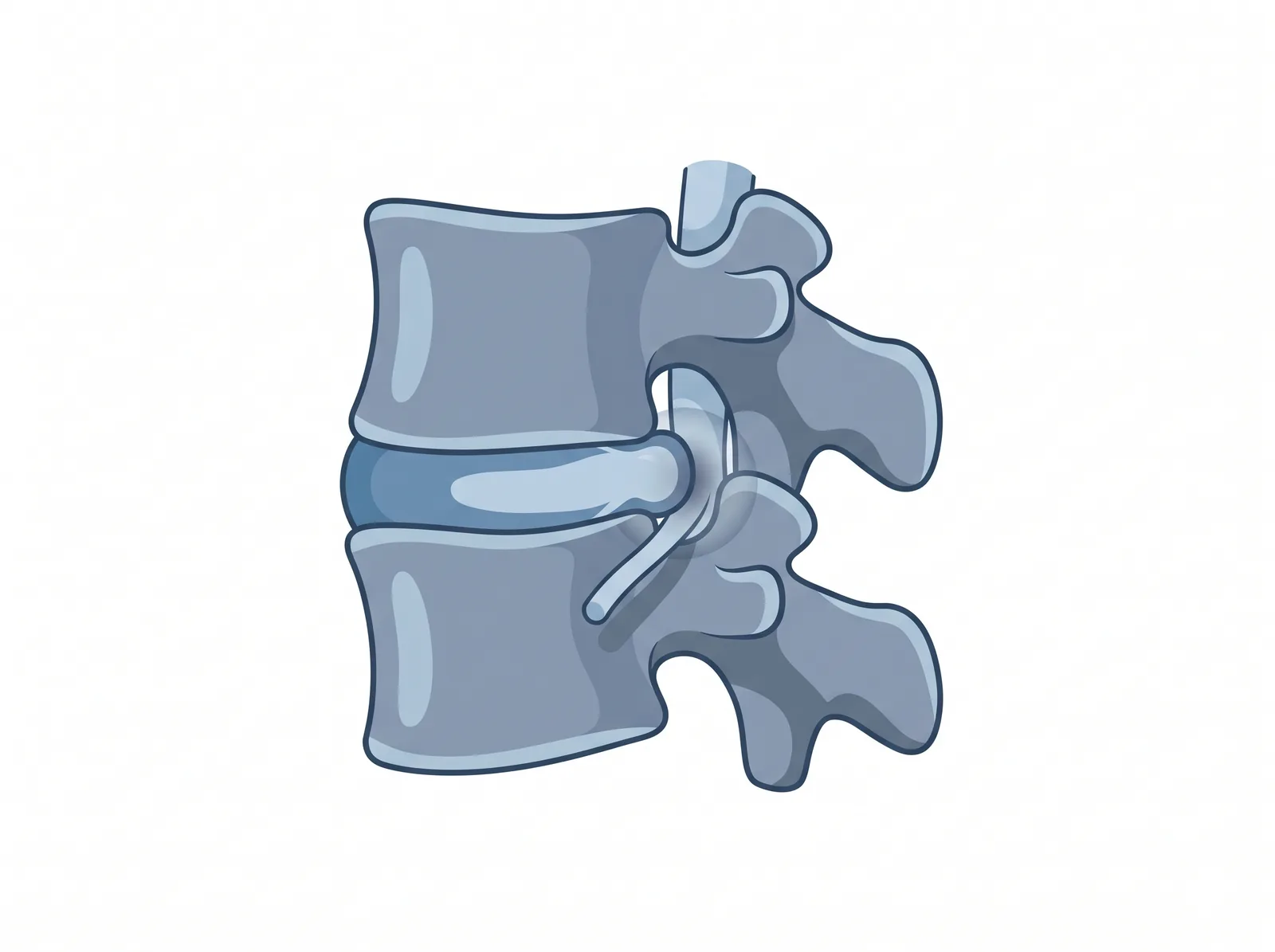
Back pain that shoots down the leg like an "electric shock," along with numbness or weakness, is often caused by a lumbar herniated disc pressing on a spinal nerve. When medication, physical therapy, and activity changes have been tried fully and symptoms still interfere with daily life — or when warning signs appear — surgery may be considered. One of the least invasive options available today is full-endoscopic lumbar discectomy. In this article I want to explain, in plain language, what this operation is, who is and isn't a good candidate, how it is done, and how to care for yourself afterward.
What is endoscopic discectomy?
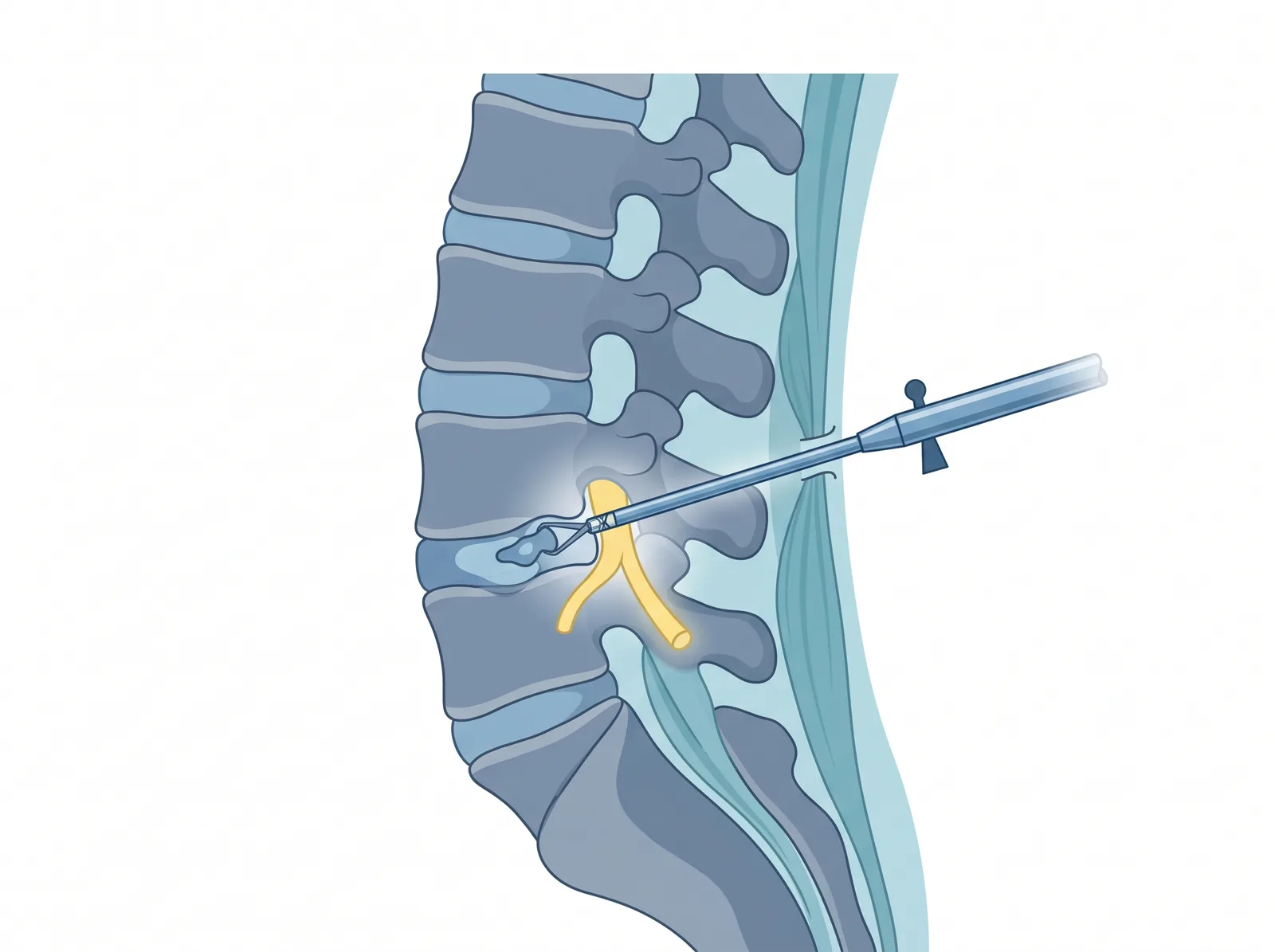
The principle is to pass a high-definition endoscope — only about 7–8 mm in diameter (roughly the width of your little finger) — through a tiny incision to reach the disc fragment that has bulged out and is compressing the nerve, and remove just the problematic portion, disturbing the surrounding muscle and tissue as little as possible. Throughout the procedure, a continuous saline irrigation system keeps the view of the nerve clear and minimizes injury.
For the big picture of what endoscopic spine surgery is, and how it differs from microscope surgery, see
Who it is for — and who it is NOT for (the honest version)
Endoscopic surgery is not right for every patient or every pathology. Choosing the right patient matters just as much as the surgical technique itself.
Often suitable when:
- A lumbar herniated disc is compressing a nerve, causing clear radiating leg pain, with a location that matches the MRI.
- Appropriate non-surgical care has been tried for a reasonable period and symptoms still disrupt daily life.
- There is numbness or weakness corresponding to that specific nerve.
Not the best choice in some situations, such as:
- Significant spinal instability / slippage that requires fusion.
- Severe multi-level canal stenosis or significant spinal deformity.
- Certain pathologies where standard open surgery remains the safer and more appropriate option.
On indications — when endoscopy is not the right call — see
How it is done (the approach)
Details are individualized, but the general flow is:
- Anesthesia — selected for each patient together with the anesthesiologist.
- A small incision — about 8 mm; the muscle fibers are gently dilated (not stripped over a wide area).
- Guiding the endoscope to the compression — using MRI planning and intra-operative X-ray for positioning.
- Removing the compressing fragment — under high-definition magnification and continuous irrigation, relieving pressure on the nerve.
- Closure — because the incision is small, only minimal closure is usually needed.
Endoscopic surgery relies on a precise MRI to plan the trajectory — see
Recovery — what to realistically expect
- Most patients are able to get up and walk relatively soon after surgery, and typically stay in hospital about 1–2 nights (depending on the individual).
- Radiating leg pain often improves quickly, but the internal healing is not instant — the outer wall of the disc (annulus) takes roughly 4–6 weeks to seal.
- For the first 4–6 weeks, follow the "BLT" rules strictly: no Bending, no heavy Lifting, no Twisting — and walk frequently.
For post-op care, hospital-stay length, returning to driving, and how long international patients should rest before flying home, see
Risks & honest limits (educational, not alarmist)
Every operation carries risk, even with a tiny incision. Risks to be aware of include:
- Recurrence: surgery fixes the mechanical compression but does not stop the natural aging/degeneration of the disc, so the problem can recur — this is not a "permanent cure."
- Dural tear / CSF leak: uncommon, but possible.
- Infection: overall, endoscopic surgery has been reported to have a very low infection rate [see references].
- Incomplete relief, or in some cases a need to convert to a different surgical approach.
On the chance of recurrence and the factors involved, see
FAQ
How many nights in hospital?
Most patients typically stay about 1–2 nights, depending on their condition and the surgeon's assessment.
How Many Days in Hospital?Can it come back after surgery?
It can recur, because surgery does not halt natural degeneration. Following the BLT rules in the first 4–6 weeks helps reduce this risk.
RecurrenceWhen can I return to work / driving?
It depends on the nature of your work and your individual recovery; light work may resume relatively soon, while driving should wait until your body is assessed as ready.
When Can I Drive Again?Is endoscopic surgery right for everyone?
No. The choice of surgical method must be individualized based on the pathology and the MRI. Consulting a spine specialist is important.
Indications for Endoscopy(Every case is different and decisions should be individualized. Consultation with a spine specialist is strongly recommended to assess your actual symptoms.)
References
- Jitpakdee, K., Liu, Y., Heo, D. H., Kotheeranurak, V., Suvithayasiri, S., & Kim, J. S. (2023). "Minimally invasive endoscopy in spine surgery: where are we now?" European Spine Journal. [Link]
- Gadjradj, P. S., et al. (2022). "Full endoscopic versus open discectomy for sciatica: randomised controlled non-inferiority trial." BMJ. [Link]
- Mahan, M. A., et al. (2023). "Full-endoscopic spine surgery diminishes surgical site infections — a propensity score-matched analysis." The Spine Journal. [Link]
- Yin, S., et al. (2018). "Prevalence of Recurrent Herniation Following Percutaneous Endoscopic Lumbar Discectomy: A Meta-Analysis." Pain Physician. [Link]

Questions about your symptoms?
Chat with us on LINE for more information
@bright.endospine
Chat on LINE